
Beat the Houston Summer Heat with a Smarter Home
Houston summers are long and hot, and a lot of the battle against the heat happens before you ever touch the thermostat. Here's how shading, climate control, lighting and simple automation work together to keep your home comfortable.
Houston summers don't ease in gently. The heat arrives early, stays late and pushes air conditioning systems hard for months. While the AC does the heavy lifting, a smart home can make that job easier by keeping heat out, using energy more wisely and keeping the house comfortable without constant adjustment.
Here are the strategies we recommend.
1. Let your shades block the afternoon sun
Windows let in a lot of heat. A U.S. Department of Energy guide cites Lawrence Berkeley National Laboratory's estimate that windows are responsible for 25% to 30% of residential heating and cooling energy use (DOE Building America).
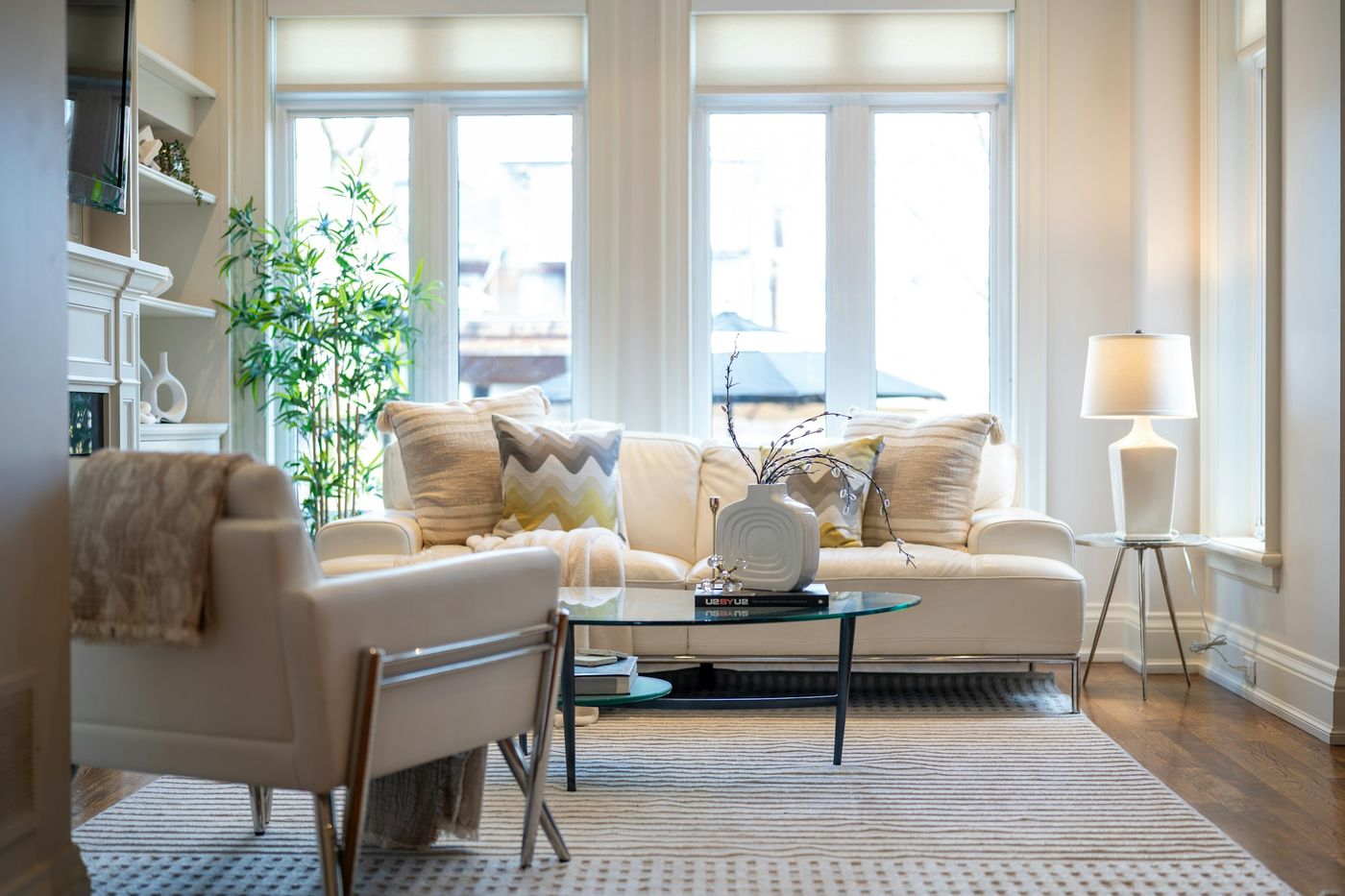
Motorized shades can lower automatically as the sun moves around the house: east-facing rooms in the morning, west-facing rooms in the afternoon. You get the view when you want it and protection when the sun is strongest, without anyone remembering to close a cord-operated blind. Our guide to automated shades for Houston heat covers the styles that work best in different rooms.
2. Put the thermostat on a smart schedule
Cooling an empty house to the same temperature all day wastes energy. A smart thermostat schedule can ease off when the house is empty and bring rooms back to comfort before you get home. ENERGY STAR estimates that certified smart thermostats save about 8% on heating and cooling bills on average, or about $50 a year, with actual savings depending on climate, preferences, occupancy and equipment (ENERGY STAR).
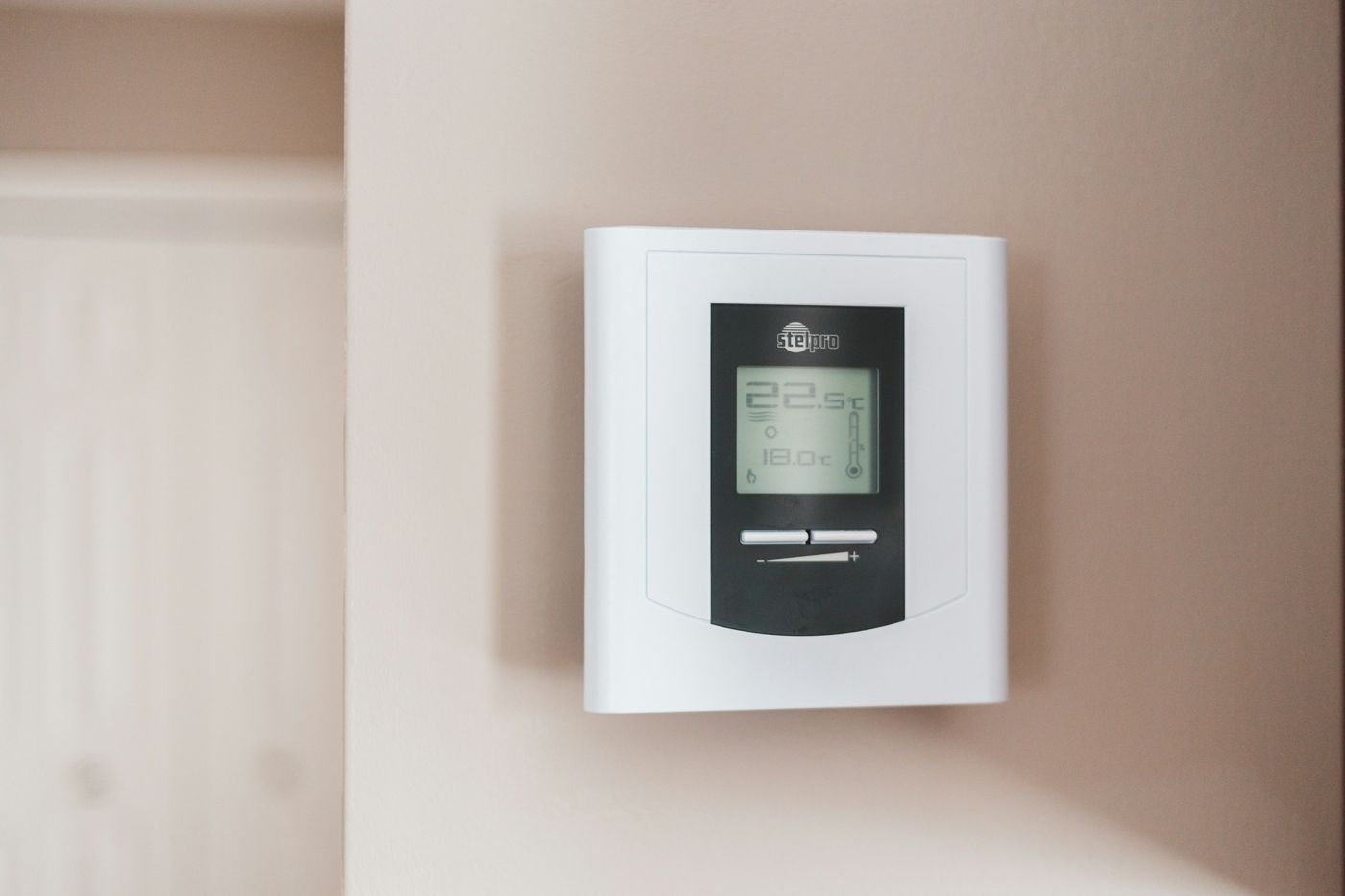
When climate control is part of your smart home system, it works alongside everything else. Thermostats can be adjusted from the same app, touch panel or keypad you use for lights and shades, by schedule, by touch or by voice. Platforms such as Crestron and Lutron include thermostat and temperature control as part of the wider system.
Seasonal schedules help too. Houston's long cooling season and short mild stretches call for different settings, and a well-programmed system makes those changes without anyone needing to remember.
3. Switch to LED lighting
Older bulbs add heat as well as light. According to the U.S. Department of Energy, incandescent bulbs release 90% of their energy as heat and only 10% as light, while LEDs use up to 90% less energy and last up to 25 times longer.
In a home with many recessed lights, the switch to LEDs and well-designed lighting control means less wasted energy and less heat added to rooms you're paying to cool. See our lighting design and control page for more.
4. Use ceiling fans wisely
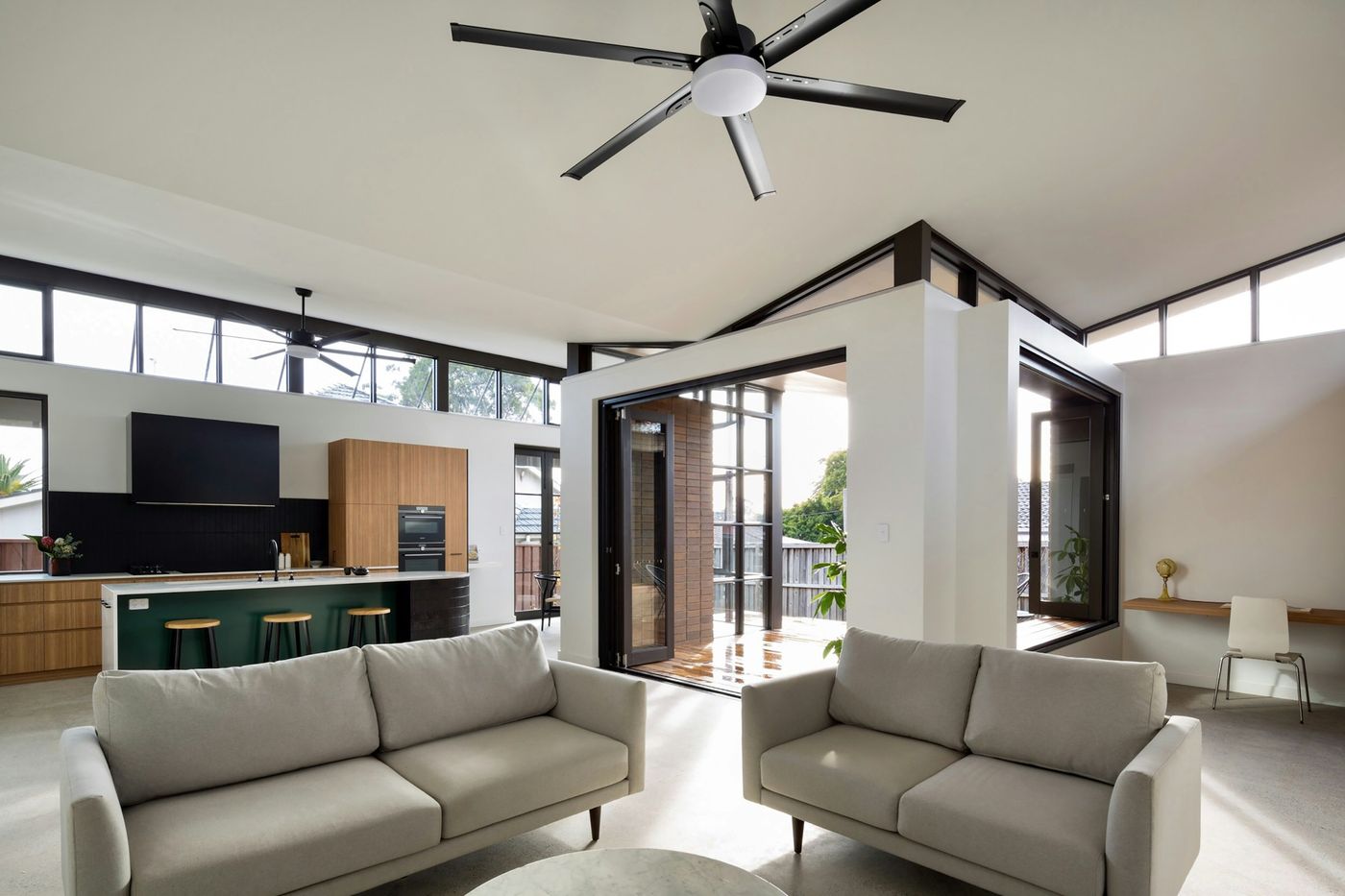
Fans are a simple helper. The Department of Energy notes that if you use air conditioning, a ceiling fan lets you raise the thermostat setting about 4°F with no reduction in comfort. DOE also reminds homeowners that fans cool people, not rooms, so turn them off when you leave.
5. Set an "Away" mode
A single "Away" button, or a schedule that runs while you travel, can raise the thermostat to an energy-saving setting, close the shades on the hottest sides of the house and turn off lights and audio. Lighting can still follow a normal evening pattern so the house looks lived in.
Remote access means you can check temperatures and adjust settings from anywhere. If you're heading home early from a trip, you can start cooling the house before you leave the airport.
6. Tie it together with scenes
The real comfort comes from coordination. A "Summer Afternoon" scene might lower the west-facing shades, adjust the lighting to balance the reduced daylight and keep the living areas at your preferred temperature, all with one touch or on a schedule. Instead of reacting to the heat room by room, the house handles it as one system.
Plan for comfort
Every home is different. The direction it faces, the amount of glass, and how and when you use each room all affect the right plan. We'll look at your home as a whole and recommend how shading, lighting and climate control should work together.
Book My Free Consultation and let's make this the summer your home finally keeps up with the heat.
